
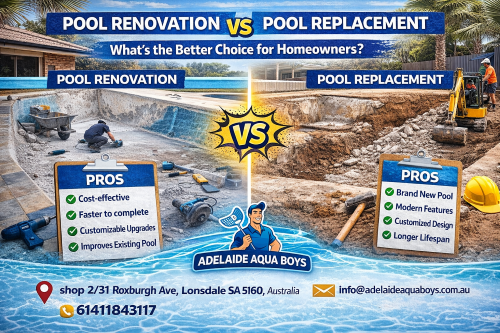
A swimming pool is often the centrepiece of a backyard, providing relaxation, entertainment, and a great space for family gatherings. However, over time pools can begin to show signs of wear such as cracked surfaces, outdated designs, inefficient equipment, or constant maintenance problems. When this happens, homeowners usually face an important question: should you renovate your existing pool or replace it completely?
Understanding the difference between pool renovation and pool replacement in Adelaide can help you make the best decision for your budget, property, and long-term goals. In this guide, we will explore both options, their benefits, costs, and when each solution makes the most sense.
What Is Pool Renovation?
Pool renovation involves upgrading or repairing parts of an existing swimming pool without removing the entire structure. Instead of starting from scratch, professionals improve the appearance, functionality, and efficiency of the current pool. Renovation projects can range from small upgrades to major transformations depending on the condition of the pool.
Common Pool Renovation Improvements
∙ Resurfacing pool interiors
∙ Replacing tiles and coping
∙ Installing modern pool lighting
∙ Updating pool decking
∙ Upgrading pumps, filters, or heaters
∙ Adding water features or spa areas
∙ Improving pool safety features
Pool renovation is often chosen when the basic structure of the pool is still solid but needs aesthetic or functional upgrades.
What Is Pool Replacement?
Pool replacement means removing the existing pool entirely and building a new one. This process usually involves demolition, excavation, and a completely new installation. Homeowners typically choose pool replacement when the current pool has major structural damage or no longer suits their lifestyle.
Situations Where Replacement May Be Needed
∙ Severe structural cracks in the pool shell
∙ Major plumbing system failures
∙ Outdated pool shape or design that cannot be renovated
∙ Pools that are extremely old and inefficient
∙ Significant foundation or ground movement around the pool
While pool replacement allows for complete customization, it is often more expensive and time-consuming than renovation.
Key Differences Between Pool Renovation and Pool Replacement
Understanding the main differences between these two options can help homeowners make an informed decision.
1. Cost
Pool renovation is generally more affordable because it improves existing structures rather than rebuilding the entire pool. Renovation costs vary depending on the upgrades, but they are usually much lower than a full replacement.
Pool replacement involves:
∙ Demolition of the existing pool
∙ Removal of materials
∙ New excavation
∙ New construction
These additional steps significantly increase the overall cost.
2. Project Time
Renovations are usually completed much faster than full replacements. A renovation may take a few days to a few weeks depending on the project scope. Pool replacement can take several weeks or even months, especially if major construction is involved.
3. Design Flexibility
Replacement offers the highest level of design flexibility. Homeowners can change: ∙ Pool shape
∙ Pool size
∙ Pool depth
∙ Pool location
Renovations can still offer impressive upgrades such as modern tiles, lighting, and water features, but they typically retain the original pool structure.
4. Environmental Impact
Renovating a pool is usually more environmentally friendly because it reuses the existing structure rather than demolishing it.
Pool replacement generates more construction waste and requires additional building materials.
5. Property Disruption
Renovation projects are typically less disruptive to your home and backyard.
Pool replacement involves heavy machinery, excavation, and construction that can temporarily transform your outdoor space into a worksite.
Signs Your Pool Only Needs Renovation
Many older pools do not require replacement and can be significantly improved through renovation.
You may only need a renovation if you notice:
∙ Faded or rough pool surfaces
∙ Cracked or outdated tiles
∙ Old pool equipment
∙ Higher energy consumption
∙ Outdated design
With modern upgrades such as energy-efficient pumps, LED lighting, and improved filtration systems, renovation can make an old pool look and function like new again.
Signs Pool Replacement May Be the Better Option
In some situations, replacing the pool may be the better long-term solution.
Consider replacement if your pool has:
∙ Major structural cracks
∙ Constant leaking problems
∙ Severe plumbing failures
∙ Poor construction from the original installation
∙ Significant ground movement damage
If repair costs become too high or recurring issues continue to appear, replacement may provide better long-term value.
Benefits of Pool Renovation
Pool renovation has become increasingly popular because it offers several advantages.
Improved Appearance
New tiles, resurfacing, and modern finishes can completely transform the look of a pool.
Increased Energy Efficiency
Upgrading pumps, heaters, and filtration systems reduces energy consumption and lowers operating costs.
Better Safety Features
Renovations allow homeowners to add safety rails, improved lighting, and anti-slip surfaces.
Increased Property Value
A renovated swimming pool can enhance the visual appeal of your home and attract potential buyers.
Benefits of Pool Replacement
Although more expensive, replacement also offers important benefits.
Completely Custom Design
You can design the pool exactly how you want, including shape, size, and features.
Long-Term Structural Reliability
A new pool eliminates hidden structural issues that may exist in older pools.
Modern Technology Integration
New builds allow for advanced automation, smart pool systems, and energy-efficient technologies.
Cost Considerations for Homeowners
Budget plays a major role when deciding between renovation and replacement.
While prices vary depending on materials, location, and design, renovation typically costs significantly less than installing a completely new pool.
However, if your pool has extensive damage, spending money on repeated repairs may not be the most cost-effective choice. In some situations, replacement might offer more long-term value.
Consulting experienced pool professionals can help you understand the most suitable option for your situation.
How to Decide What’s Best for Your Pool
When choosing between pool renovation and replacement, consider the following questions: ∙ Is the pool structure still strong and stable?
∙ Are the issues mainly cosmetic or structural?
∙ What is your budget for upgrades?
∙ Do you want a completely new pool design?
∙ What is the duration of your intended stay on the property?
If the structure is sound and you want to modernize the pool, renovation is usually the best solution. If the pool has serious structural problems or you want a completely different design, replacement may be more suitable.
Final Thoughts
Both pool renovation and pool replacement offer valuable benefits depending on the condition of your existing pool and your long-term goals. Renovation is typically the most practical choice for homeowners who want to improve the look, efficiency, and functionality of their pool without the high cost of rebuilding.
However, if your pool has significant structural issues or no longer meets your needs, replacement may provide a fresh start and a fully customized swimming experience.
Before making a decision, it’s always best to consult experienced pool specialists who can inspect your pool and recommend the most effective solution. With the right approach, you can transform your outdoor space into a beautiful, functional pool area that adds enjoyment and value to your home for years to come.
Also Read: Everything You Need for Pool Care – Right Here in Adelaide | Adelaide Aqua Boys

